

A Lectionary Reflection for Third Sunday in Lent March 8, 2026: The Woman at the Well, Iran, and Armageddon

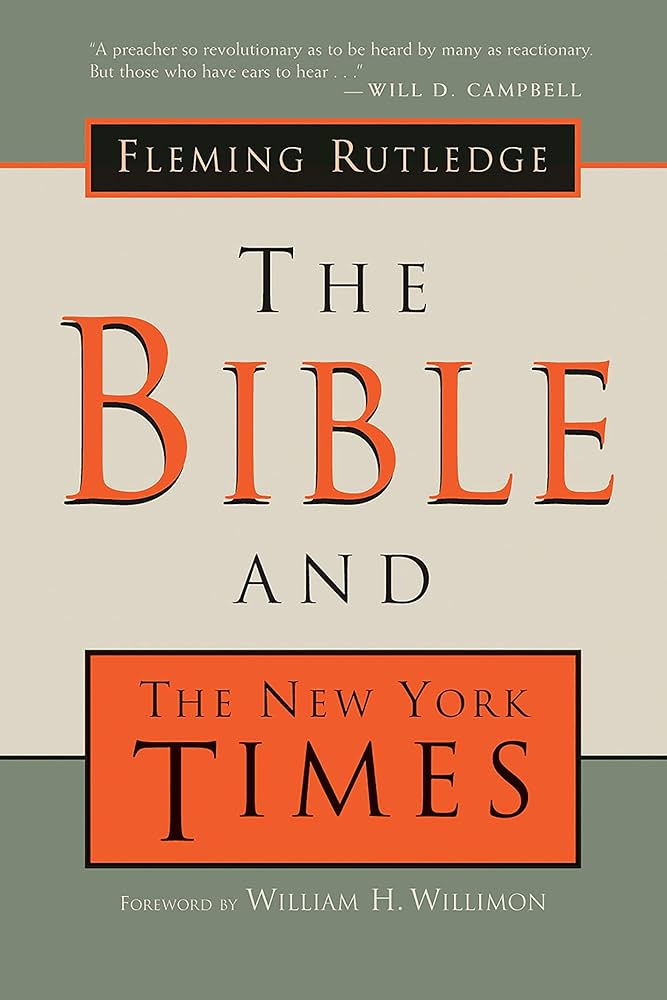
There is an old saying for preachers, often attributed to the Swiss theologian Karl Barth, that to write a sermon one should have the Bible in one hand and the New York Times in the other. The point was not that the news should dictate the meaning of Scripture, but that Scripture should illuminate the world we are actually living in. This week offers an unusually stark example of why that advice still matters. The Gospel reading for Sunday brings us to a well in Samaria. The headlines bring us to bombs falling on Iran.
Ordinarily a preacher might try to keep those two worlds politely separate. One could remain safely within the boundaries of John’s Gospel—lingering over the symbolism of living water or the quiet audacity of Jesus crossing the boundary between Jews and Samaritans—without wandering “getting politcal.” But that separation becomes harder to maintain when the news itself begins quoting the Book of Revelation. When apocalyptic language migrates from pulpits into military briefings, the line between religious imagination and political action becomes difficult to ignore.
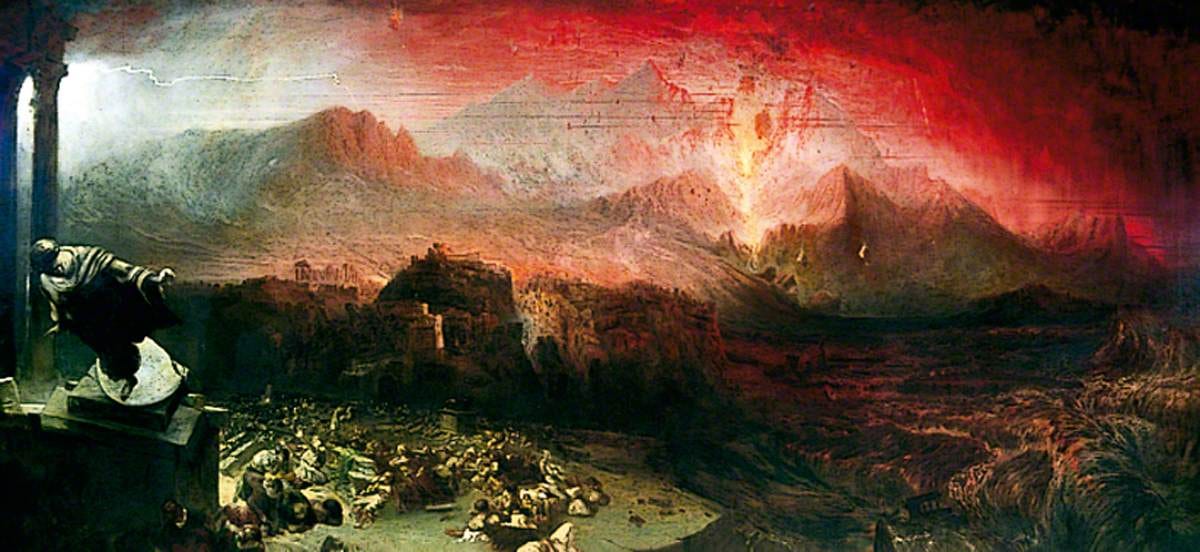
This week, according to multiple reports, a U.S. military briefing concerning operations in Iran did not remain strictly tactical. The Military Religious Freedom Foundation released a complaint submitted by an active-duty noncommissioned officer describing how a commanding officer framed the mission itself as part of God’s unfolding plan for the end of history. The officer reportedly urged troops not to be afraid of what was happening in Iran because the conflict was “all part of God’s divine plan,” citing passages from Revelation about Armageddon and the return of Christ. According to the complaint, the commander went so far as to declare that “President Trump has been anointed by Jesus to light the signal fire in Iran to cause Armageddon and mark his return to Earth.”
The language is striking, though not simply because it is religious. American public life has long been threaded with religious rhetoric—sometimes openly stated, and sometimes, as readers of Andrew Thayer Studio know, embedded more quietly within the political and economic assumptions we inherit without noticing. These older theological currents often remain beneath the surface, half-forgotten yet still shaping the way we imagine power, authority, and destiny.
What makes this episode different is its explicitly apocalyptic frame. The statement does not merely place unfolding events under the familiar language of divine providence. It situates military action inside an end-times timetable. In that framework, combat operations cease to appear as tragic consequences of human conflict and instead become accelerants in a divinely scripted finale.
Such thinking did not emerge overnight. The theological scaffolding has been under construction for decades. Beginning in the late twentieth century, strands of American evangelical teaching increasingly interpreted events in Israel and the broader Middle East through the lens of Revelation, reading contemporary headlines as markers along the road to Armageddon. What once belonged primarily to prophecy conferences and best-selling religious paperbacks gradually seeped into the wider political imagination. The language of end-times prophecy moved from the margins of religious subculture toward the center of public conversation.
Those who have long argued that American newsrooms underestimate the importance of religion in public life have often sounded alarmist. Yet when military briefings begin with references to Armageddon, the failure to understand the country’s apocalyptic subcultures ceases to be an academic oversight. It becomes a civc vulnerability. Ideas that once circulated mainly among televangelists and prophecy enthusiasts now shape how some citizens—and, apparently, some leaders—interpret global events.
The theological groundwork for this outlook has been visible for years. In December 2017, President Trump announced that the United States would recognize Jerusalem as Israel’s capital and relocate the American embassy there. The decision became official on May 14, 2018, when the embassy opened in Jerusalem. For many diplomats, the move represented a strategic recalibration of American policy in the Middle East. For parts of the evangelical world, however, it carried deeper symbolic meaning.
Among those urging the relocation was John Hagee, founder of Christians United for Israel. In that theological orbit, the embassy was not simply a building transferred from Tel Aviv to Jerusalem but a signal flare in sacred history, an act interpreted as aligning American power with biblical prophecy. The relocation resonated with a broader interpretive framework often described as Christian Zionism, which regards the modern state of Israel as playing a central role in the unfolding of end-times events. Seen through the lens of Hagee’s interpretation specifically and empire generally, the embassy move begins to look like more than a diplomatic adjustment, it begins to carry theological meaning where Jerusalem is not simply a contested city but a sacred stage where the final chapters of history are expected to unfold.
Over the past several decades, these interpretations have moved steadily from the margins of religious culture into the corridors of political power. Evangelical leaders, voters, and advisers have become an increasingly influential constituency within American politics, and their theological assumptions have inevitably shaped how some policymakers think about the Middle East. What began as preaching about prophecy has gradually filtered into policy conversations about alliances, embassies, and regional conflict.
In that imagination, decisions about Jerusalem carry more than diplomatic significance; they carry prophetic weight. When a superpower aligns its foreign policy with that symbolic geography, diplomacy can begin to look like the unfolding of God’s plan. The imperial temptation appears not only in military strength but in the growing confidence that a nation might somehow play a role in bringing prophecy to completion.
This is also the interpretive world in which seemingly obscure religious developments take on surprising importance. The so-called Red Heifer project—efforts by some religious groups to breed a ritually pure red cow described in the Book of Numbers—has drawn attention because certain prophecy teachers believe such rituals would be necessary for restoring temple worship in Jerusalem. What might otherwise appear to be an arcane detail of ancient ritual law becomes, within this framework, another signal that the prophetic clock is advancing.
Within that narrative, recognizing Jerusalem becomes less about borders than about meaning. National power is cast as a participant in a divine drama already underway. The danger is subtle but real. When a government and its military begin to see itself as actors in the end of history, criticism can start to sound like irreverence, diplomacy can appear as hesitation, and war itself can begin to feel less like tragedy than destiny.
To understand why such rhetoric resonates, it helps to revisit the biblical image of Armageddon itself. The word appears only once in Revelation: “They assembled them at the place that in Hebrew is called Armageddon” (Rev. 16:16). The term evokes Har-Megiddo—Mount Megiddo—near what is now Tel Megiddo overlooking the broad sweep of the Jezreel Valley. In the ancient world, Megiddo was a strategic military corridor where empires collided. Pharaohs, Canaanite kings, and later imperial armies marched through that valley, leaving behind a long memory of conflict and conquest.
The author of Revelation gathers that history and transforms it into apocalyptic symbolism. The kings of the earth assemble, the forces of empire concentrate, and history appears to tighten toward a final confrontation. Yet when the climactic moment arrives, the imagery shifts in unexpected ways. The conquering figure at the center of the vision is first introduced not as a warrior but as a Lamb that has been slain. The sword by which he defeats the nations proceeds from his mouth rather than from his hand. Revelation reads like the literature of war, but its deeper purpose is to expose the pretensions of imperial power rather than to provide a strategic blueprint for earthly armies.
That distinction has often been lost in modern American interpretations. Beginning in the nineteenth century and accelerating in the twentieth, certain strands of Protestant teaching treated Revelation less as symbolic critique and more as chronological forecast. In this framework Armageddon becomes not metaphor but map. Israel becomes prophetic clock and the Middle East becomes the stage upon which the final act of history will unfold. Popular teachers have described a coming antichrist, a seven-year global empire, and a climactic battle that will culminate in Christ’s visible reign from Jerusalem. Within that narrative, geopolitics begins to look less like human decision and more like the unfolding of a predetermined script.
Survey data suggest that white evangelicals—who today make up roughly 14–17 percent of American adults—remain one of the religious groups most likely to interpret developments in Israel through the lens of biblical prophecy.* Polling consistently finds that large majorities believe contemporary events in the region correspond in some way to prophecies found in the Book of Revelation. Within this theological ecosystem, developments in Jerusalem are therefore not merely distant diplomatic events but tremors along the fault line of history’s end. Even relatively obscure religious projects—such as efforts to breed a ritually pure red heifer in preparation for the rebuilding of a future temple—can take on outsized significance within this interpretive framework.
Against this backdrop, the Gospel appointed for Sunday offers a striking counterpoint. In John 4, Jesus travels not to Megiddo but to Sychar, a Samaritan and speaks to the woman as she has come to draw water, alone, in the heat of the noonday sun. In their exchange, the Samaritan woman raises the question that has divided their communities for generations: “Our ancestors worshiped on this mountain, but you say that the place where people must worship is in Jerusalem.” The issue at stake is sacred geography. Who possesses the true altar? Which mountain carries divine authority? Whose story defines the covenant?
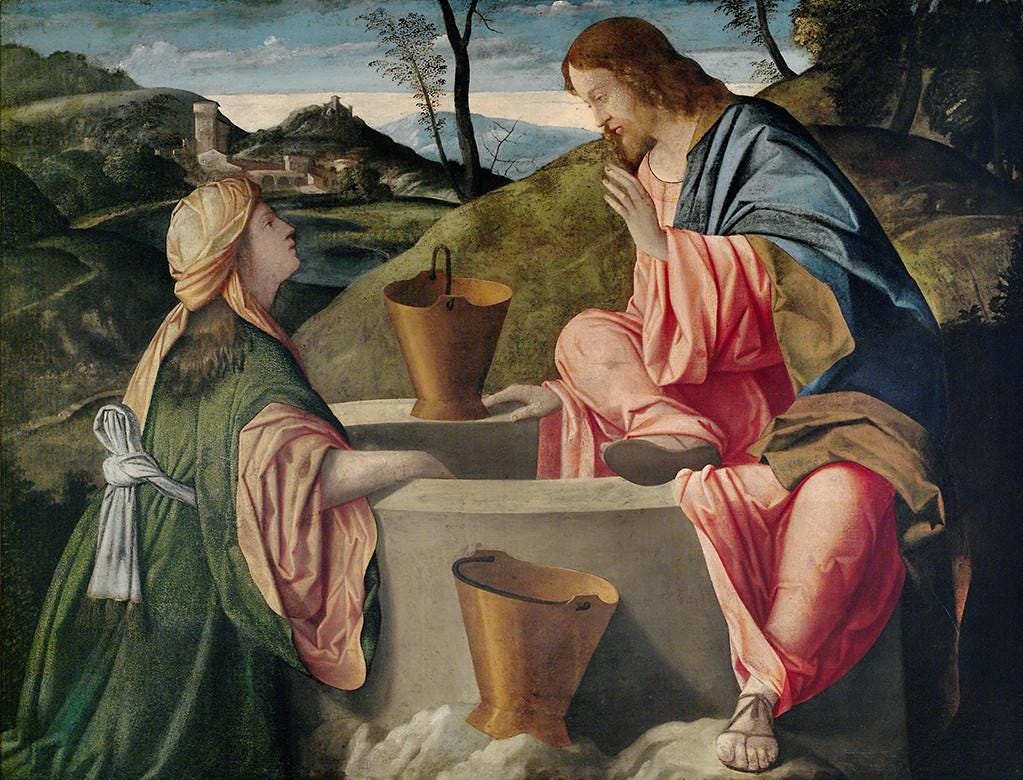
Jesus refuses the premise of the dispute. “The hour is coming,” he tells her, “when you will worship the Father neither on this mountain nor in Jerusalem.” In a single sentence he relativizes the terrain that both sides had treated as sacred ground. Worship will not be secured by altitude, temple, or control of contested land. It will take place “in spirit and truth.”
Sychar and Megiddo lie within the same northern landscape of the biblical world, separated by only a few dozen miles. Yet they represent two radically different theological grammars. Megiddo gathers kings and armies, concentrating power in anticipation of decisive conflict. Sychar gathers thirst, revealing a Messiah who transforms lives through encounter and never conquest. Megiddo imagines history resolved through force. Sychar imagines history transformed through conversation.
Revelation, read in its historical context, challenges every empire that claims divine sanction for its power. John’s Gospel, read beside it, portrays a Messiah who crosses boundaries without seizing them and who inaugurates his kingdom not through the ignition of signal fires but through the patient work of reconciliation.
The temptation of empire has always been to sacralize its own strength. The danger arises when political power begins to imagine itself as the instrument through which divine destiny must unfold. In such moments war begins to look less like a tragic failure of human cooperation and more like a necessary step in the fulfillment of prophecy.
Megiddo will always tempt the human imagination with spectacle. Sychar offers something quieter and far more demanding. It suggests that God’s decisive work in the world may unfold not through the concentration of power but through the steady erosion of hostility—one conversation, one act of truth, one crossing of boundaries at a time.
*With thanks to T J Elliott for correcting old statistics that I first referenced, since changed.
Andrew, this just an excellent, insightful essay. Thank you. Most of the Christians I know who hold to the kind of dispensational premillenial eschatology that connects modern wars to specific concepts and passages in Scripture (and sees Revelation as a roadmap for modern endtime events) have no awareness that this is a relatively modern approach when it comes to interpreting Scripture. They read the Left Behind books and just thought, "Well, that's what the Bible teaches". They hold the theology of John Nelson Darby and Clarence Larkin, but have never heard their names. More and more these days I find myself thinking about how theologies often have long term implications that shape the Christian imagination, for better or for worse.
Andy, I finally overcame the computer and got your site. I've missed the way you interpret Scripture and power and life. The interpretation of qne group on the Iranian venture is frightning when I thought it was a misguided game the pres is playing. The visit at the well, etc. brings a lot into focus, Reading a book, CROSS PURPOSES, have you seen it? Hope all is well.