

PROPHET
Part of the Stealing it Back Series

Carnac the Magnificent—The modern prophet?
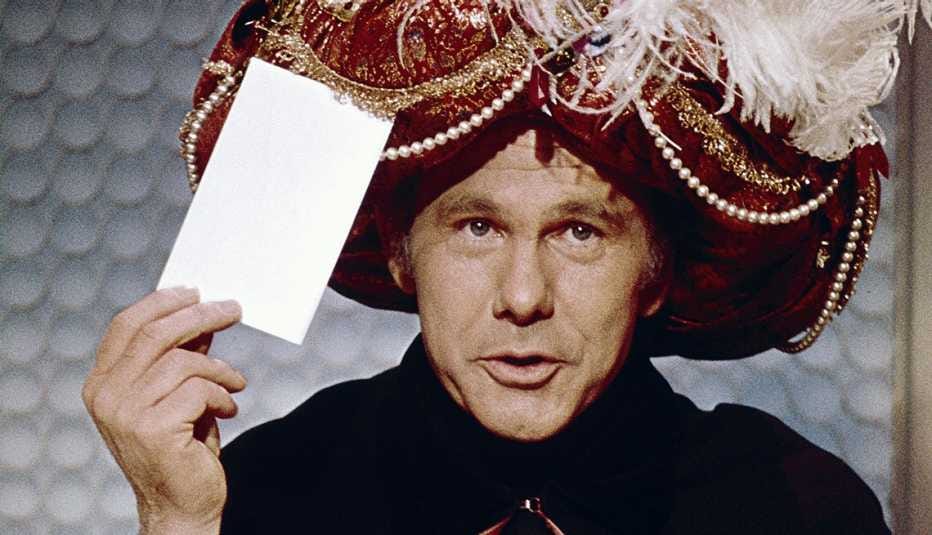
I remember the Magnificent Carnac fondly—Johnny Carson, wrapped in a turban, holding a sealed envelope to his forehead, the most famous “prophet” in America. As Carnac, Carson made a running gag out of all-knowing prediction: divine the answer, then rip open the envelope to reveal the question. The absurdity was the point. How many camp skits did we write using that tried-and-true Carnac method! Looking back, they’re now a kind of time machine—parodies frozen in the amber of late-night comedy. It was shtick, not scripture. But the caricature stuck. I think when many people hear the word prophet, they still picture something like the Carson gig: someone who knows the future—part carnival mystic, part horoscope writer, part sideshow seer.
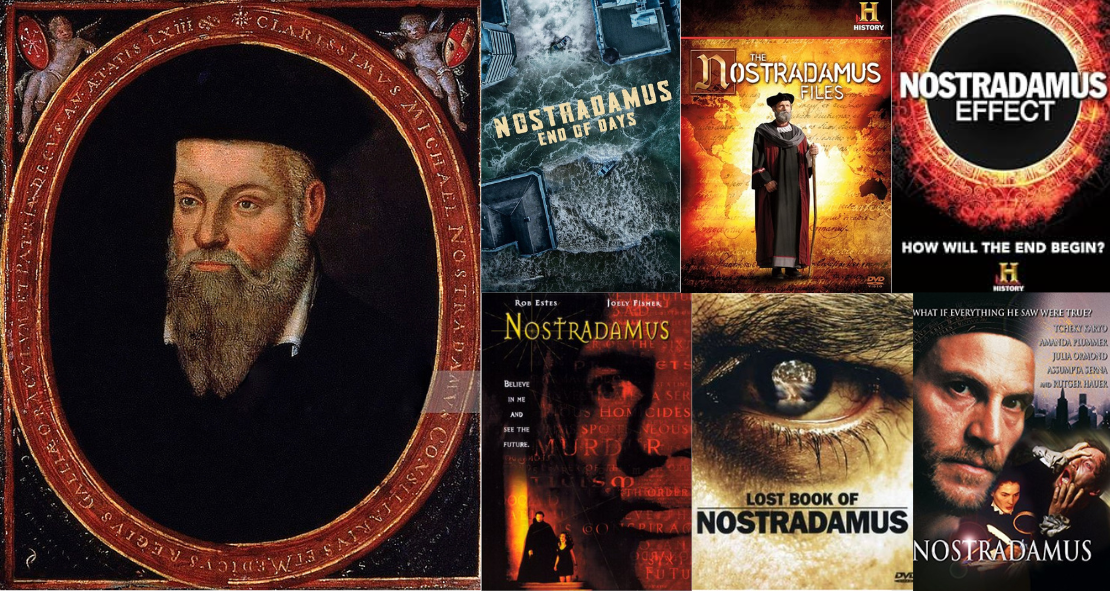
Nostradamus
It was funny—but grounded, in its own way, in reality. If Carnac was parody, Nostradamus was received in deadly earnest. The sixteenth-century French physician cloaked his predictions in archaic French, laced with Latin, Greek, and regional dialects—obscure enough, some say, to avoid persecution, or perhaps simply to keep readers guessing. Either way, it worked.
Take his most infamous prediction, Century 10, Quatrain 72:
The year thousand nine hundred ninety nine seven months
Of heaven shall come a great King defrayer (redeemer)
To bring to life again the great King of Angolmois.
Before after Mars reigns by good luck.
For decades, readers have grafted that verse onto everything from the Cold War to September 11. And that is the trick: Nostradamus’s genius was not prophecy—it was ambiguity. His “King of Terror” could be anyone. “Seven months” could mean July, or something metaphorical. Vagueness guarantees longevity. His riddles survive not because they foretold the future, but because they can be retrofitted to any catastrophe after the fact.
And yet the hunger for prediction never fades. End-times prophecy is a renewable market. Nostradamus didn’t just inspire curiosity—he launched a genre. His legacy now spins off documentaries, books, clickbait, and cable specials. The business of doom remains brisk.
The Business of Doom (Camping, Y2K, and Beyond)
The appetite for prediction has never gone away. It is a renewable resource, and in the modern era it has become a business model.
Few embodied this more than Harold Camping, the California radio evangelist who predicted the end of the world not once, but repeatedly: first in 1994, then in 2011. For many of his followers, he was a kind of modern Noah—a lone righteous man warning a sinful world of the flood to come. He bought billboards across America, drew global media attention, and stoked fear that Judgment Day was imminent. When the date passed uneventfully, he recalculated—October instead of May, another slight delay in God’s timetable. Each failure only heightened the spectacle.
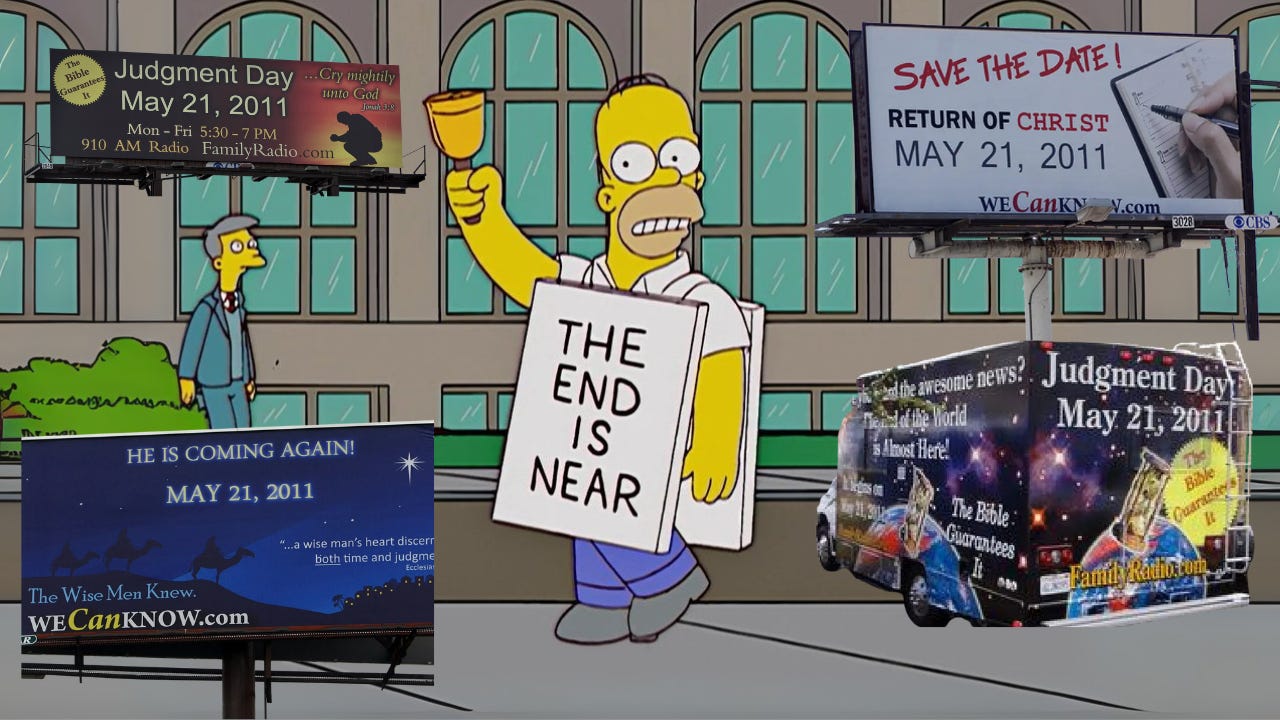
What was really happening wasn’t prophecy but public relations. Camping understood that prediction sells. A countdown gives urgency, creates headlines, rallies followers, and moves money. Family Radio reportedly raked in $80–100 million in the years leading up to the May 21 prophecy—It was a fortune built on fear.
But prophets never received that kind of reward. Quite the opposite. Their words cost them dearly—drawing prison sentences, exile, and death. Jesus himself made the contrast plain: “Whoever receives a prophet in the name of a prophet will receive a prophet’s reward” (Matthew 10:41). The “reward” of the prophet is not wealth or safety. It is the costly honor of telling the truth—and the backlash that always comes with it.
From farce to obscurity to spectacle, we’ve inherited a distorted image of the prophet. It’s time to steal it back.
The Hebrew prophets, who consistently called for justice, were treated the same way by those in power. Amos, who thundered, “Let justice roll down like waters, and righteousness like an ever-flowing stream,” was driven from the temple at Bethel, tortured and killed. Micah, who preached, “What does the Lord require of you but to do justice, love kindness, and walk humbly with your God?” was struck down by the son of King Ahab for daring to rebuke Israel’s corruption. Isaiah, who insisted, “Seek justice, rescue the oppressed, defend the orphan, plead for the widow,” was sawn in two under King Manasseh. Jeremiah, who warned Judah’s rulers that their temple would not save them, was beaten, thrown into a cistern, and later dragged into exile—until he was stoned to death in Egypt. Ezekiel, who carried the weight of God’s word in Babylon, was murdered by his own countrymen in exile. And Zechariah, who cried out against the king’s betrayal of covenant faithfulness, was stoned to death in the temple court itself.
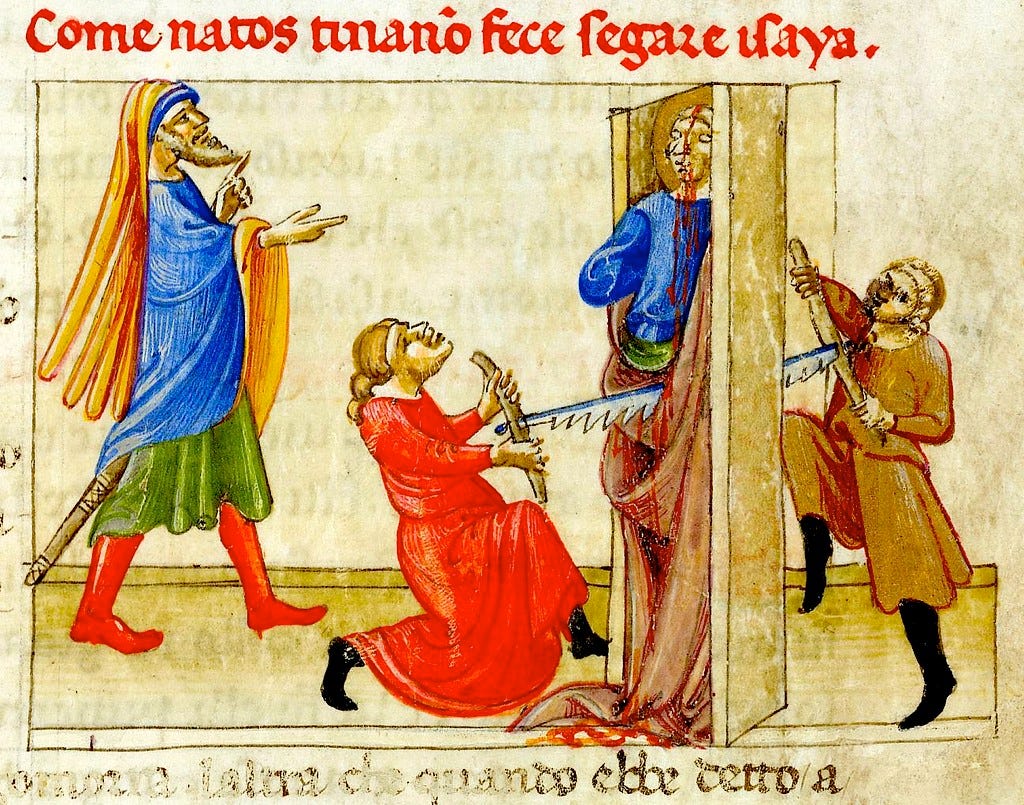
Time and again, those who demanded justice found themselves crushed by those who profited from injustice. It seems clear, given the prophets’ reward, that they were not talking about the distant future. If an oppressive king had demanded of a prophet, “Are you talking about me?” and the prophet had replied, “Oh no, sire, I speak of something that will happen seven hundred years from now,” none of them would have been imprisoned, tortured, or killed. Kings don’t execute people for vague predictions; they silence them for dangerous truths.
So what is a prophet?
Etymologically - The very word prophet has been misunderstood. In Hebrew the term is נָבִיא (navi), which comes from a root meaning “to call” or “to speak forth.” A prophet is not someone who guesses the future but one who is called to speak on God’s behalf. In Greek, the word is προφήτης (prophētēs)—from pro (on behalf of, or in front of) and phēmi (to speak). A prophet, then, is literally “one who speaks on behalf of another.”
Neither word carries the sense of fortune-telling. A prophet is not a Nostradamus, muttering cryptic lines about some far-off future. A prophet is a spokesperson: one called, compelled, seized by a word that cannot be silenced.
The Prophets
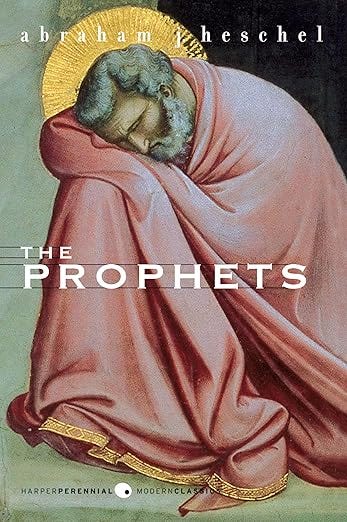
Abraham Joshua Heschel, in his magisterial book The Prophets, insists that the prophetic voice is not a matter of prediction but of participation in God’s anguish. He writes:
“The prophet is a man who feels fiercely. God has thrust a burden upon his soul, and he is bowed and stunned at man’s fierce greed. Frightful is the agony of man; no human voice can convey its full terror. Prophecy is the voice that God has lent to the silent agony, a voice to the plundered poor, to the profaned riches of the world. It is a form of living, a crossing point of God and man. God is raging in the prophet’s words.”
This is why prophets are so unsettling. They don’t merely deliver religious information; they embody divine passion. They tremble with God’s grief, burn with God’s anger, and speak with God’s urgency. That is why their words cut through pretense and why their lives so often end in ruin.
But to understand the prophet more clearly, it helps to say what a prophet is not. A prophet is not a mystic. The mystic ascends upward, seeking union with God in private visions, silence, or ecstasy. The prophet moves in the opposite direction—downward—carrying God’s anguish into the marketplace, the palace, and the temple. The mystic leaves the world behind; the prophet plunges into it with God’s fire.
A prophet is not a priest. The priest is the guardian of ritual, structure, and continuity—the one who keeps the system running. The prophet is the one who interrupts ritual when it becomes a cover for injustice. Isaiah declared that God hated sacrifices when the people’s hands were “full of blood” (Isaiah 1:15). Priests preserve the order; prophets disrupt it when order masks oppression. That is why institutions so often resist them.
And a prophet is not a soothsayer. The soothsayer tells fortunes, like Nostradamus or the oracles, predicting calamities to come. The prophet does something far more dangerous: he discloses God’s moral will in the present moment. Amos did not predict a famine centuries away; he denounced the elites of his own day for selling the poor for a pair of sandals. Prophets don’t say, “Tomorrow disaster will arrive.” They say, “Today you have abandoned the widow, the orphan, and the poor.”
In other words, prophets are not mystics lost in ecstasy, priests safeguarding routine, or fortune-tellers whispering riddles about tomorrow. They are God’s truth-tellers in the present tense—and it is that truth, not any distant prediction, that gets them killed.
Walter Brueggemann: The Prophetic Imagination
Walter Brueggemann, who recently died on June 5, 2025, was one of the rare theologians I would call a true prophet—and I don’t use that word lightly. He did not just analyze Scripture; he unsettled his readers with it. His lectures and books did not soothe; they disrupted. He kept insisting that the work of prophecy was not safely confined to the pages of the Old Testament but was alive and urgent for the church today.
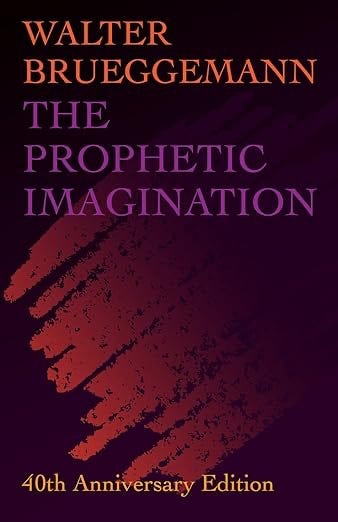
In The Prophetic Imagination, Brueggemann reframes Moses not merely as a deliverer of slaves but as a challenger of empire itself. As he wrote:
The program of Moses is not the freeing of a little band of slaves as an escape from the Empire, though that is important enough, especially if you happen to be in that little band. Rather, his work is nothing less than an assault on the consciousness of the empire, aimed at nothing less than the dismantling of the empire both in its social practices and in its mythic pretensions.
Moses’s task, then, was not just liberation but imagination—the capacity to shatter the myths that made Pharaoh’s order seem inevitable. Prophets do not merely deliver people out of bondage; they dismantle the very stories that justify bondage in the first place.
Brueggemann shows how this prophetic work takes root through four practices. First, memory: prophets summon us to remember God’s liberating acts, like the Exodus, when empire insists we forget. Second, pain: prophets give permission to grieve, while empire covers suffering with denial and distraction. Third, hope: prophets dare to announce that God will do something genuinely new, not because of optimism but because of trust in divine freedom. And fourth, discourse: prophets speak in poetry, lament, and metaphor—alternative language that cracks the clichés of empire and opens up imagination.
For Brueggemann, this is not a matter of pious reflection but of active resistance. Prophetic imagination is the antidote to imperial numbness. It destabilizes what seems permanent and evokes the possibility of something better.
And Brueggemann pressed this vision upon the church. He insisted that prophecy is not just the vocation of a few lonely individuals, but the collective calling of God’s people. As he put it:
The prophetic tasks of the church are to tell the truth in a society that lives in illusion, grieve in a society that practices denial, and express hope in a society that lives in despair.
Truth, grief, hope. These three form the rhythm of prophetic ministry. The church’s job is not to baptize the status quo, but to break its illusions, name its sorrows, and announce an alternative future rooted in God’s justice.
But prophecy doesn’t end in the pulpit—or the academy. It is not the private possession of scholars and clergy. It is not locked away in seminaries or sealed in theology books. The prophetic voice lives and breathes in ordinary people who dare to speak with honesty, grieve with clarity, and hope with audacity. And it shows up, more often than not, in places that don’t look particularly religious.
Richard Rohr is one such voice.
In The Tears of Things: Prophetic Wisdom for an Age of Outrage, Rohr offers a stark warning:
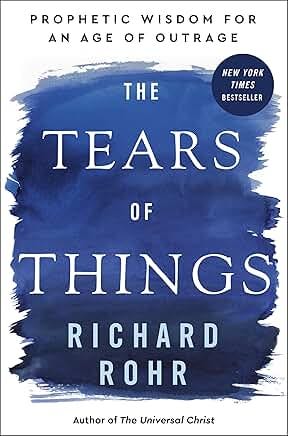
“Once we lose the prophetic analysis, most evil will be denied, disguised, or hidden among the rules and rituals of religion and the law itself.”
Prophecy, for Rohr, as for Brueggemann and Heschel, is not clairvoyance or magical foresight—it is the courage to face reality as it is, to hold the world’s suffering without flinching, and to speak out of that wound with faith. The true prophetic path, he writes, moves through three stages:
“All the prophets started with ANGER, or even rage, at all the right things: injustice, oppression, deceit, misuse of money, power, even religion itself.” But anger alone is not the destination. In Rohr’s account, the journey must pass through SADNESS—the breaking open of the heart—and emerge on the far side in HOPE. Not a cheap hope. Not the optimism of those untouched by suffering. But a hard-won, soul-tested hope that refuses to yield to despair.
It’s the same arc the apostle Paul outlines in Romans—an arc that sounds like madness if you’ve bought into the modern gospel of comfort, achievement, and the relentless pursuit of happiness:
We rejoice in our sufferings,
knowing that suffering produces endurance,
and endurance produces character,
and character produces hope.
And hope does not disappoint us. -Romans 5:3–5
This is the prophetic imagination.
So think of the modern prophets that inspire you.
Those who stand up when it would be easier to sit down.
Those who speak when silence would be safer.
Those who carry truth into rooms that do not want to hear it—and do so not with bitterness, but with a broken-open heart.
You know that same fire lives in you.
You sense it—we all do, at some level, because we are made in the image of God.
The temptation is to smother it with denial, numb it with cynicism, bury it under anger or despair.
I get it. The truth is you may never stand before Pharaoh and say “Let me People go.”You may never lead a march or write a manifesto. But if you’ve ever told the truth when it would’ve been easier to stay silent, you’ve already joined the lineage.
If you’ve ever grieved the pain others tried to ignore, or dared to imagine a different way when the world insisted “this is just how it is”—you’ve already been called.
Don’t wait for permission to speak as a prophet. You can start in small ways.
In quiet rooms. In trembling courage. Write letters, mail postcards. Whisper the hard truth at coffee…or, if you are called, shout it through a megaphone. Just do somet9ing to disrupt the numbness and interrupt the despair.
Let the prophetic imagination live in you.
Because the world doesn’t need more priests of empire.
It needs prophets of grace.
"Prophets of Grace"--great phrase, one I will remember. Thanks.
You could remove all reference to deity and be saying the same thing.
Thanks for your good work.