

Apocalypse: Pulling back the veil
Reflection on Transfiguration Sunday (RCL) — February 15, 2026

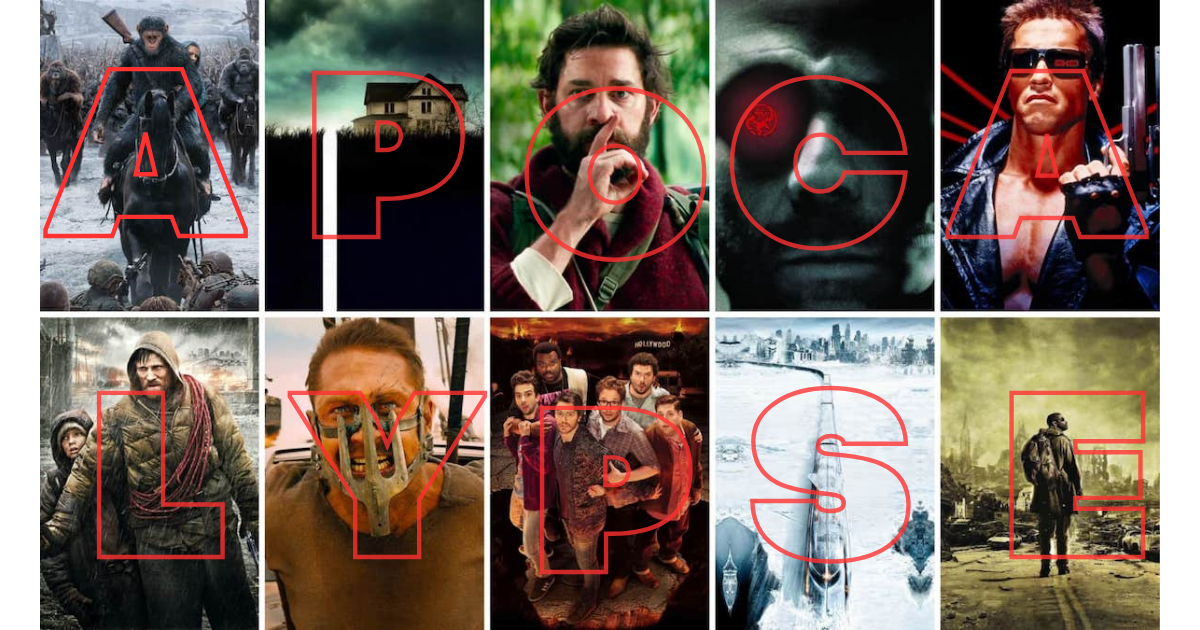
For many Christians, the word apocalypse sounds like the collapse of everything. It conjures images of burning cities, global chaos, and divine judgment falling from the sky. For decades, popular imagination — shaped by rapture fiction, disaster films, and speculative prophecy charts — has trained believers to hear apocalypse as catastrophe. Cultural figures who once helped popularize that vision have, in recent years, begun stepping away from it, citing deeper engagement with biblical scholarship and church history. That shift signals something important. Christianity has not always understood apocalypse as destruction. For most of its history, it meant something far more unsettling — and far more hopeful.
A better image of apocalypse comes not from modern disaster movies but from an unlikely place: The Wizard of Oz. When Toto pulls back the curtain, nothing explodes. The booming voice does not shatter the room. The great and powerful Oz does not vanish in fire or smoke. Instead, something more destabilizing happens. The machinery of spectacle is exposed. The illusion of absolute authority is revealed to be something smaller, more fragile, and far less ultimate than it first appeared. That moment is apocalyptic in the biblical sense. Not destruction. Not prediction. Disclosure.
The Greek word apokalypsis means unveiling — the pulling back of a curtain so reality can be seen as it truly is. Apocalypse is not about the world ending. It is about illusions ending. It is about seeing the deeper truth beneath the noise of power, fear, and spectacle that so often dominate public life.

Closely related is another word Christians frequently misunderstand: eschatology. Popular religion treats eschatology as a countdown clock — the study of how and when everything collapses. But theologians like Jürgen Moltmann insist eschatology is not about final destruction. It is about God’s future breaking into the present. Eschatology is not Christianity staring at an ending. It is Christianity staring toward a horizon pulling history forward. It is the conviction that the future God intends is already quietly reshaping the present moment.
The command to “listen to him” quietly reorganizes every other authority — religious, political, moral, and cultural.
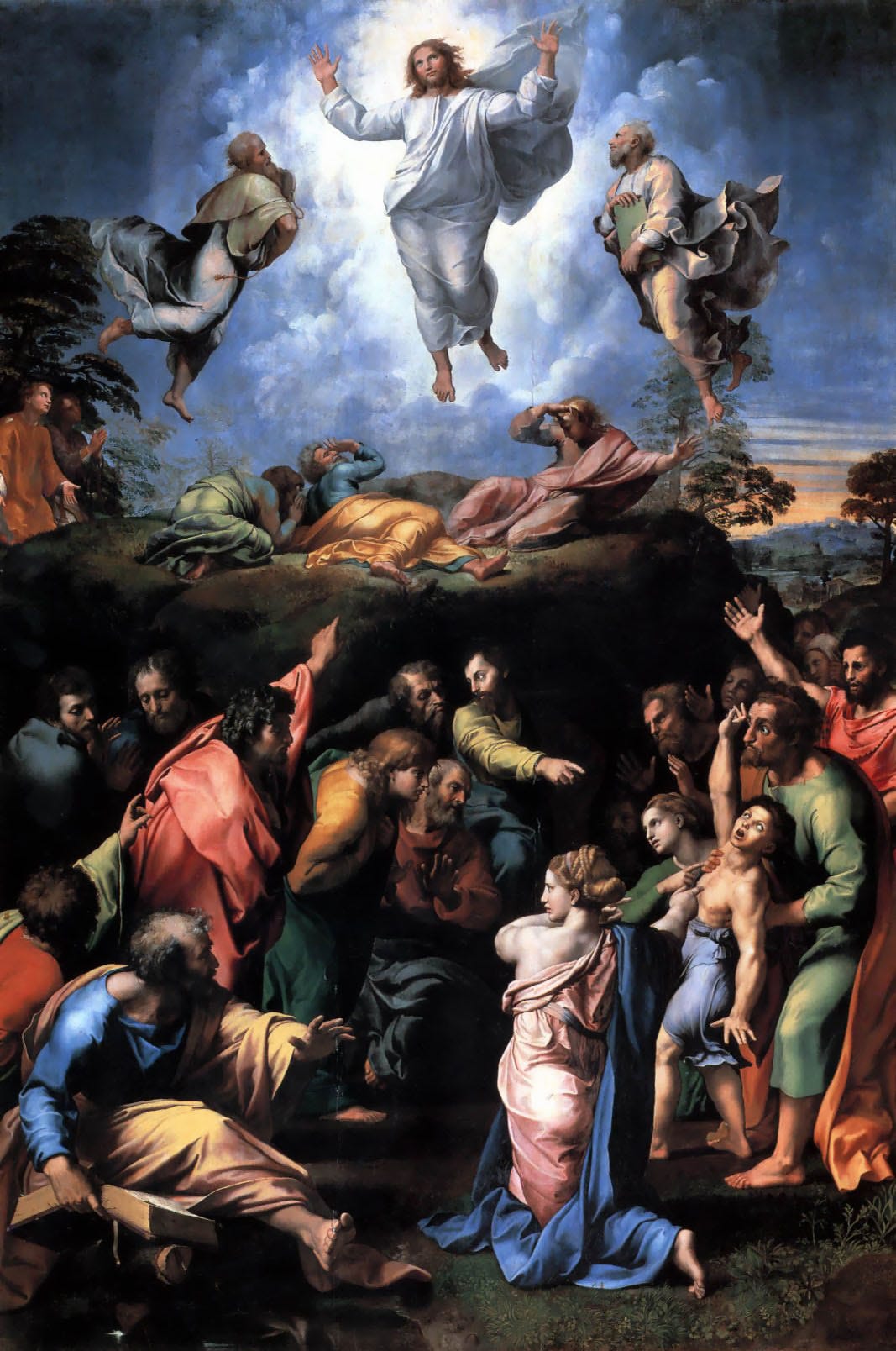
Six days after Jesus begins speaking openly about suffering and death, he takes Peter, James, and John up a mountain. What happens there is often described as miraculous transformation, but the deeper theological claim is far more subtle. The Transfiguration is not primarily about Jesus becoming something new. It is about the disciples briefly seeing what has always been true.
On the mountain, time collapses. Moses and Elijah appear beside Jesus, representing the law and the prophets — the entire story of Israel standing witness to the one they had been pointing toward all along. Jesus’ face shines. His clothes become dazzling. A cloud overshadows them, and a voice declares, “This is my Son, the Beloved; listen to him.” The mountain becomes an apocalyptic space. The veil lifts. Reality is disclosed.
But it is also profoundly eschatological. The disciples are given a glimpse of resurrection glory before the cross. They are shown, ahead of time, what suffering and death will not be able to erase. The future is revealed as a way of orienting them for the crisis they are about to face.
Peter’s response is painfully human. Overwhelmed by clarity, he tries to preserve it. “Lord, it is good for us to be here. Let me build three dwellings.” Faced with revelation, Peter reaches for architecture. He wants to stabilize the moment, institutionalize the vision, construct something permanent enough to hold divine certainty still. He is interrupted mid-sentence.
The divine voice does not endorse preservation. It gives a command: “Listen to him.”Throughout Christian history, this has been the dividing line between two recurring versions of the faith. There is always a Christianity tempted to build booths on the mountain — systems of certainty, institutions of control, alliances with power that promise stability. And there is the Christianity that descends the mountain to follow Jesus back into vulnerability, ambiguity, and sacrificial love.
Both forms of Christianity begin with the same diagnosis. The world is fractured. Communities are breaking apart. Violence, fear, and mistrust seem to organize public life. Empire Christianity, authoritarian movements, and the original Jesus movement all recognize this fragmentation. They simply disagree about how healing happens.
Empire heals fragmentation through domination. Order is maintained through hierarchy and controlled violence. Fascism heals fragmentation through fusion — promising unity by erasing difference and creating mythic national belonging. Both offer clarity through power. Both promise salvation through strength.
The Jesus movement proposes something far stranger and far more dangerous. It does not deny the fracture. It refuses to heal it through violence or control. Instead, it proposes self-giving love as the only force capable of restoring what fear has shattered. The Transfiguration reveals that divine authority itself is cruciform. The voice from the cloud does not direct the disciples toward power, law, or spectacle. It directs them toward a Messiah who will soon kneel to wash feet and submit to execution. That is the unveiling.
The command to “listen to him” quietly reorganizes every other authority — religious, political, moral, and cultural. Moses and Elijah do not disappear because they are rejected. They disappear because they are now understood through Jesus. Every law, every tradition, every national story must be interpreted through the life of the one who refused violence and forgave his enemies.
Modern life offers endless exposure but very little revelation. The news cycle operates as a constant stream of pseudo-apocalypse — endless breaking stories, moral outrage, and crisis language. We see more than any generation in history, and yet many of us feel increasingly disoriented. Information multiplies, but wisdom thins. The machinery of power grows louder, not clearer. The Transfiguration offers a different kind of unveiling. It is not louder than the world. It is deeper than the world. It reminds believers that beneath the chaos of history stands a reality not controlled by empire, not secured by force, and not erased by suffering.
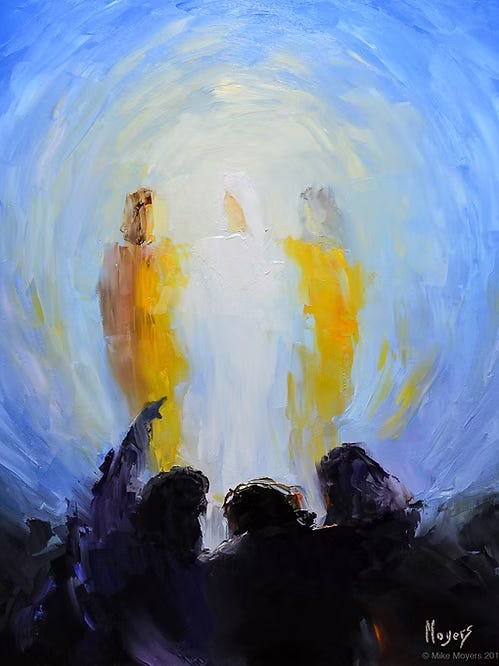
The disciples do not stay on the mountain. They cannot. Spiritual clarity is never given as an escape from history. It is given as preparation to walk back into it. They descend toward arguments, betrayal, violence, and eventually the cross itself. But they descend with a memory that reorients everything they are about to witness. They have seen, if only for a moment, that glory and vulnerability are not opposites in God’s economy. They are the same revelation.
Perhaps that is the quiet mercy of the Transfiguration. God does not remove us from the disorienting world we inhabit. Instead, God occasionally pulls back the veil just long enough for us to remember which voice still speaks above the noise.
"And there is the Christianity that descends the mountain to follow Jesus back into vulnerability, ambiguity, and sacrificial love." This goes against so much of what we are taught, what we cling to for security and stability. No wonder the writer of Hebrews calls the Gospel a stumbling block and folly. So often we prefer the veil over God's reality.
Thank you for your awesome insights. I hope you will be able to guide us through a season of Lent - how can Lent make sense in our time? Do we need Lent/HolyWeek/Easter?